HAB Info
Description of M. fulvencens
Margalefidinium fulvescens (Iwataki, Kawami & Matsuoka) Gómez, Richlen & Anderson, 2017
The cell rounded to ellipsoidal with cell size of 30.00–45.00 µm in length, exist in single-cell forms and chains of 2, 4 and 8 cells. The cingulum was rather deep and encircling the cell approximately twice. Blooms of this species can result in reddish-brown discoloration of seawater. It produces cyst and known as a fish-killer, exhibiting ichthyotoxic properties similar to M. polykrikoides which can lead to mortalities of wild and cultured fish· The species is distributed globally in temperate and tropical oceans including the Gulf of Mexico, the Caribbean Sea, the Mediterranean Sea, Coastal areas of Southeast Asia and the eastern Pacific Ocean.
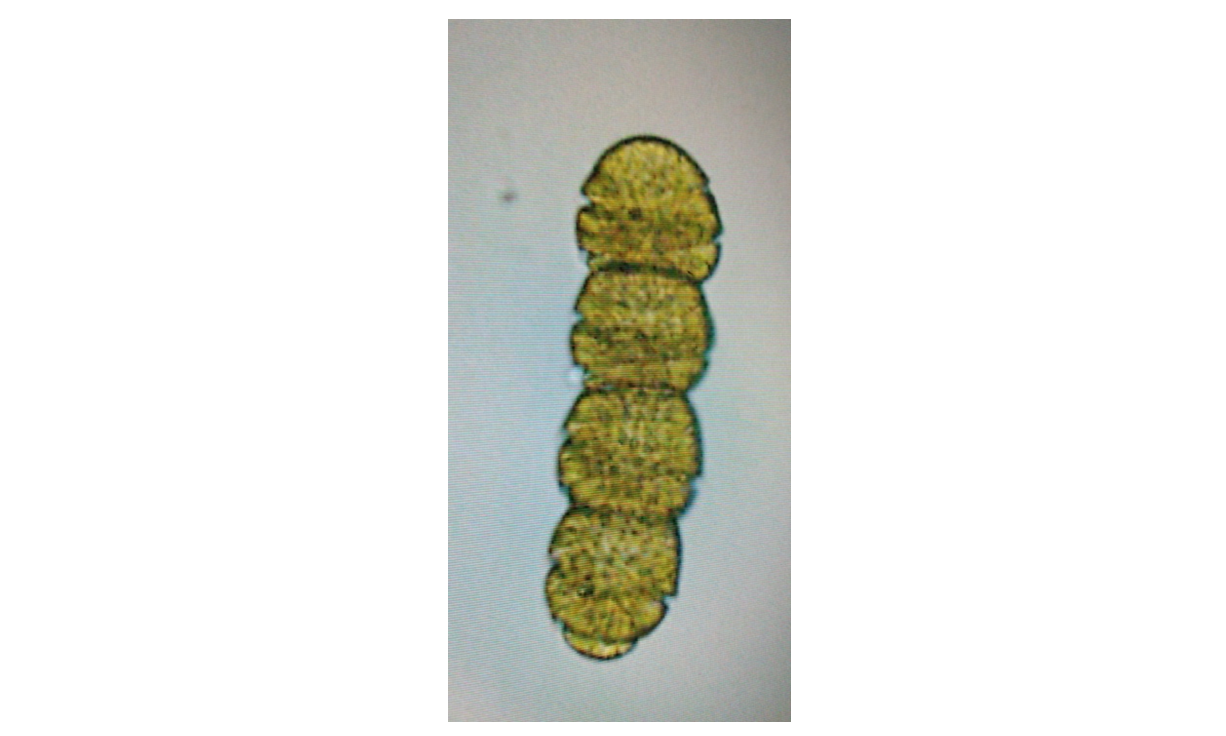
Margalefidinium fulvencens in chain of 4 cells
Description of M. polykrikoides
Margalefidinium polykrikoides (Margalef) F. Gomez, Richlen & D.M. Anderson 2017
The cell elongated with cell size of 30-40 µm long and exist in single cell or in chain of 2-4 cells. The cingulum is displaced making 1.8-19 turns. Produce cyst and known as fish killer. The bloom of the species cause reddish-brown of seawater and known as rust tide. The species is distributed globally in temperate and tropical oceans including North America, Southeast Asia, South Korea and Europe.
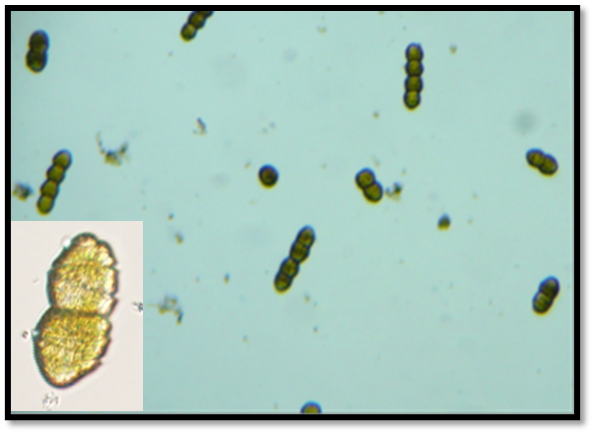
Margalefidinium polykrikoides
Description of N. scintillans
Noctiluca scintillans (Macartney) Kofoid & Swezy 1921
The cell is large i.e. 2 mm in diameter therefore can be seen by our naked eye. The unique characteristic of this species are the presence of tentacle and Pedinomonas noctilucae which lives symbiotically with Noctiluca. This cause the species to form green bloom. Noctiluca without the symbiont will cause tomato soup-like color when its bloom. The species feed on diatoms and dinoflagellates and widely distributed in tropical, subtropical and temperate coastal waters.
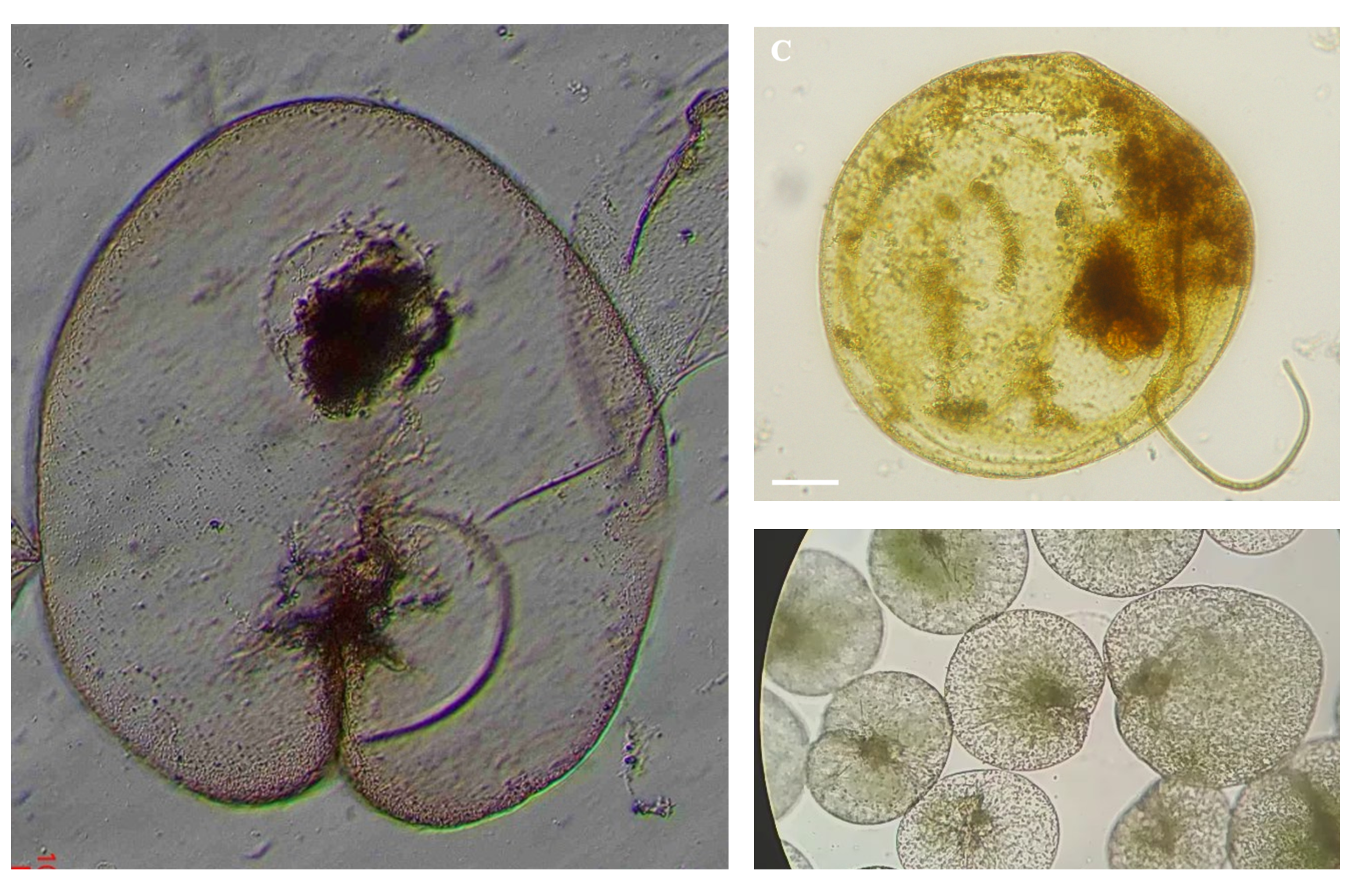
Noctiluca scintillans showing tentacle